|
|
 Posted - January 13 2011 : 11:29:41 PM Posted - January 13 2011 : 11:29:41 PM


|
|
As the title states. I may not have searched good enough but how do you clean your track and locomotive wheels? Any good tips we could put as a sticky for noob's like me. Could we or do we have a write-up on recommended locomotive and track maintenance?
|
Country:  USA ~
Posts: 133 ~
Member Since: January 30 2010 ~
Last Visit: April 07 2019 USA ~
Posts: 133 ~
Member Since: January 30 2010 ~
Last Visit: April 07 2019
|
 Alert Moderator
|
|
|
|
Posted - January 14 2011 : 06:36:52 AM


|
quote:As the title states. I may not have searched good enough but how do you clean your track and locomotive wheels? Any good tips we could put as a sticky for noob's like me. Could we or do we have a write-up on recommended locomotive and track maintenance?
Originally posted by Jeepman - January 13 2011 : 11:29:41 PM
|
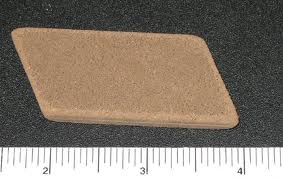
Oh, the track is easy enough. Get a Bright Boy from a model train hobby store, it's basically a trapiodal shaped eraser-looking item with abrasives molded into the rubbery substance, and you rub that on the track to clean it up. NEVER use steel wool! Neva! The green scrubbies can be used, but they catch on the ties, so you have to be careful.
Rolling stock and engine wheel cleanup? ALWAYS a perennial headache. Many guys in my club use a paper towel, alcohol, and run each powered truck over the soaked towel ON THE POWERED TRACK, but that's assuming you have a good engine with all-wheel pick-up. WIth a tyco or other type with half the power from each truck separate, that won't work. Nor with rolling stock. Toothbrushes, scrubbies, dremel with brass brush, all can be used effectively, but patience is required. They sell a wheel-cleaning device, if you want to shell out $300 for it, I think. Basically it's a hands-on and time-consuming process, and you basically have to deal with each axle individually. In a perfect world, there would be a way to hook up power directly ( and easily! ) to each motor, and holding them upside down, clean each wheel as it turned. In reality, it takes some effort to achieve that. I personally like the green scrubbie pads for minor grunge. If that doesn't do it, a brass brush comes out to remove the tarnish on old brass wheels. Harbor Freight sells tooth-brush sized brass brushes, if you have one near you.
Basically, lots of patience is required, and individual wheel/axle attention is necessary. and again, NO steel wool ! Stay away from it, it will clog up stuff as it breaks off while cleaning, don't go there.Not worth it. How do I know?   and engine magnets LOVE the stuff. and engine magnets LOVE the stuff. 
So, save some old tooth brushes, get some green scrubby pads, and invest in a small brass brush, either rotary/dremel or toothbrush type or both, and have at it. No easy way here.
EDIT - 7:25 AM
Ok, here's some pics of what I"m talking about - first, the brightboy
Here's a neat item, this is N scale, I'm going to look for a bigger HO scale similar to this. Should NOT be used with traction tires, though! ( Tyco is out, then ).
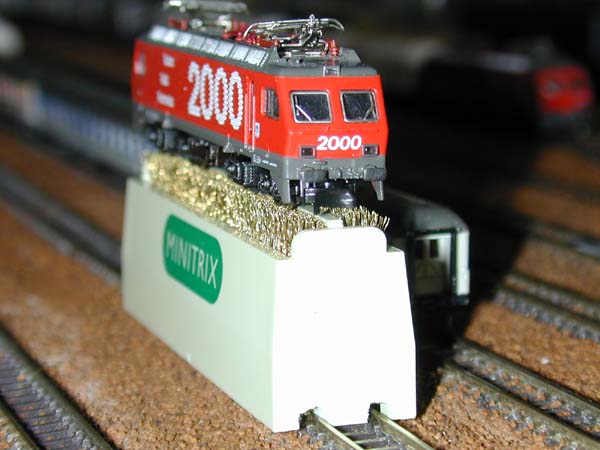
I have a similar hand-held type like the trix that you clip to a power pack, and use it on loco's ( again, those with both ground and hot on EACH truck, not alternating like Tyco and bachmann, etc. ).
" When life throws you bananas...it's easy to slip up"
Edited by - AMC_Gremlin_GT on January 14 2011 07:25:51 AM
|
|
Country: USA ~
Posts: 3974 ~
Member Since: January 04 2009 ~
Last Visit: January 11 2019
|
Alert Moderator

|
|
|
|
Posted - January 14 2011 : 6:53:08 PM
|
| I do the same with my track. My steam locos I use a Q-Tip with alcohol to clean the wheels. On many diesel locos, I use a paper towel laid out on the rails and sprayed with a spritz of alcohol. I then crank up the throttle and carefully place the loco on the track, allowing it to pull itself up onto the now wet paper towel, one end at a time. This gives the wheels the cleanest scrub I've ever seen.
|
|
|
|
|
Posted - January 15 2011 : 2:00:23 PM
|
here's what one member does
I burnished it, according to the method called "Gleam" that a few people promoted over at the MR forums, and it works.
What I did was lay the track, cleaning off any heavy oxide. I used a brass wire brush on the rail ends. Then I sanded the tops with 600 grit paper to smooth them. Sandpaper scares people, but 600 grit is finer than a Bright Boy, and the next step removes even the small scratches left.
Now take a stainless-steel washer, and burnish the track to smooth off any fine scratches left by the paper.
On the MR forum, people sometimes use Dritz metal polish at this stage. I haven't needed it.
Finally, clean the rail with alcohol and a rag. After that, don't touch it with abrasives of any kind (although I do use 1200 grit crocus cloth, on rare occasions, if a loco drops oil and causes a crud spot, somewhere.) Maintain clean track with a Masonite pad, and occasional wipings with alcohol and a rag.
My Masonite slider car is made from a Life-Like 40' box, which have hollow weight-mounting lugs that are perfect for pad-mounting purposes. At the moment, it's drawbar-coupled to a battered old Bachmann U-boat with a Life-Like power truck, just because it's the fastest diseasel I have. Track-cleaning service is also a good way to shine up brass wheels on train-set diseasels. :)
This leaves the rails so clean and smooth that they won't collect much dirt. In fact, I just got back to my trains, after leaving the table to collect junk and basement dust for 6 months (home repair season), and was able to run diesels with 4-wheel power pickup, without even cleaning the track.
A few switches and track sections are newer NS from the train store, treated the same way. The brass and steel don't get any dirtier.
Of course, nobody ever believes me, when I tell them that this method works, but it really does. :D
also there is a product called Rail Zip
you can also make a track cleaning car attaching a piece of Masonite board to the under carraige or a pad with alcohol
|
|
Country: USA ~
Posts: 424 ~
Member Since: June 25 2010 ~
Last Visit: July 30 2021
|
Alert Moderator
|
|
|
|
|
|
 Home
Home Forums
 Events Calendar
 Forum Admins & Mods
 Register