|
|
 Posted - April 16 2011 : 2:49:07 PM Posted - April 16 2011 : 2:49:07 PM


|
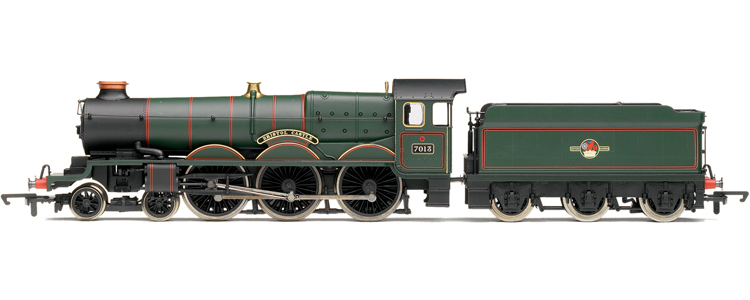
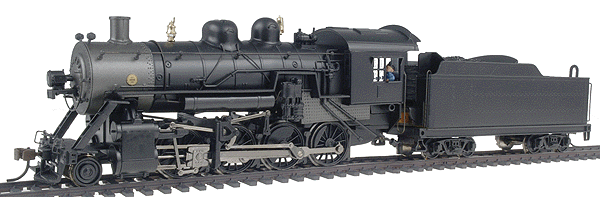
having never been a train driver,a question thats been sitting in my head for years is the complexity of the steam locos drives,gwr locos only had the one rod between 3 drivers others had more complex ones see photos,and please tell me advantanges ken
|
Country:  United Kingdom ~
Posts: 8294 ~
Member Since: September 28 2006 ~
Last Visit: October 20 2021 United Kingdom ~
Posts: 8294 ~
Member Since: September 28 2006 ~
Last Visit: October 20 2021
|
 Alert Moderator
|
|
|
|
Posted - April 16 2011 : 4:59:45 PM
|
>>> http://en.wikipedia.org/wiki/Stephenson_valve_gear
>>> http://en.wikipedia.org/wiki/Walschaerts_valve_gear
>>> http://en.wikipedia.org/wiki/Baker_valve_gear
Hope that helps....
|
|
|
|
|
Posted - April 17 2011 : 07:26:48 AM

|
I think, in a nutshell, the more complex rod system had a mechanical advantage over the simpler single-rod systems, allowing a much heavier train to get started moving easier. But it had to have a kick-start motion I think to do that.
Jerry
" When life throws you bananas...it's easy to slip up"
|
Country:  USA ~
Posts: 3974 ~
Member Since: January 04 2009 ~
Last Visit: January 11 2019 USA ~
Posts: 3974 ~
Member Since: January 04 2009 ~
Last Visit: January 11 2019
|
Alert Moderator

|
|
|
|
Posted - April 17 2011 : 07:41:54 AM
|
Part of the disparity may be from the pictures. The second locomotive, what you are seeing is the valve gear to operate the pistons and the reverse mechanism. The main rod attaches to the third driver. That rod going up from there looks like power reverse. The European loco drawing does not show all this valve gearing. Whether it is left off for the sake of simplicity in the artwork or is hidden on the actual locomotive, I don't know. I have a book: How Steam Locomotives Really Work, by Semmens and Goldfinch. Published in jolly ol' England. In depth information, probably more than you want to know. Perhaps, the links shaygetz posted will give the answer.
Unspoken expectations are premeditated failures.
|
|
Country: USA ~
Posts: 825 ~
Member Since: December 22 2008 ~
Last Visit: March 16 2015
|
Alert Moderator
|
|
|
|
Posted - April 17 2011 : 08:18:28 AM
|
| thanks for answers and links guys,the great western railway was famous for using interchangeable parts to save costs,hence the similarity of the different classes,hall,king,castle,saint,etc,which meant that repairs were quick,as even if you could not get spare from workshop,you could get from another loco which was in for overhaul,from what i have gleaned from the links etc,all other parts were behind drive wheels in oil baths,great western railway locos were very reliable,and they have at least one thing in common with the pennsylvania railroad,the use of the belpaire firebox,which is why me and frank chose the name pgw for our transatlantic co-operation railroad,ken
|
|
Country: United Kingdom ~
Posts: 8294 ~
Member Since: September 28 2006 ~
Last Visit: October 20 2021
|
Alert Moderator
|
|
 Home
Home Forums
 Events Calendar
 Forum Admins & Mods
 Register


