|
|
 Posted - August 19 2026 : 3:15:30 PM Posted - August 19 2026 : 3:15:30 PM


|
Long ago, inspired by a magazine article which claimed a Bowser Pennsylvania H9 Consolidation outpulls a Mantua Mikado, I was inspired to get one. Another article that described how to make it more generic, so it wouldn't scream Pennsy and only Pennsy on my freelance railroad, prompted me to change the look of it to something you might find anywhere.
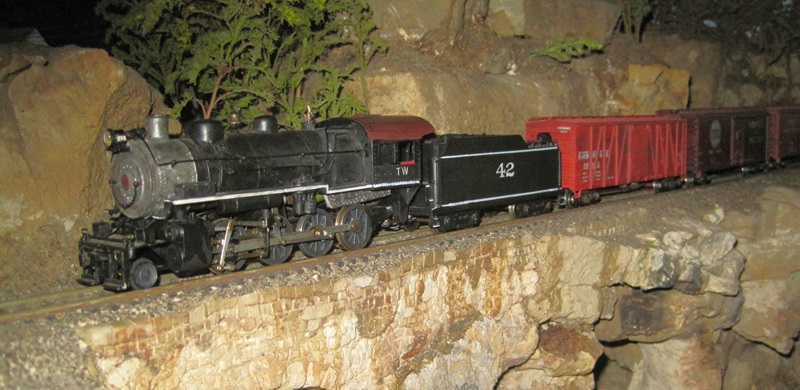
The ruling grade on my layout is about 5 percent.
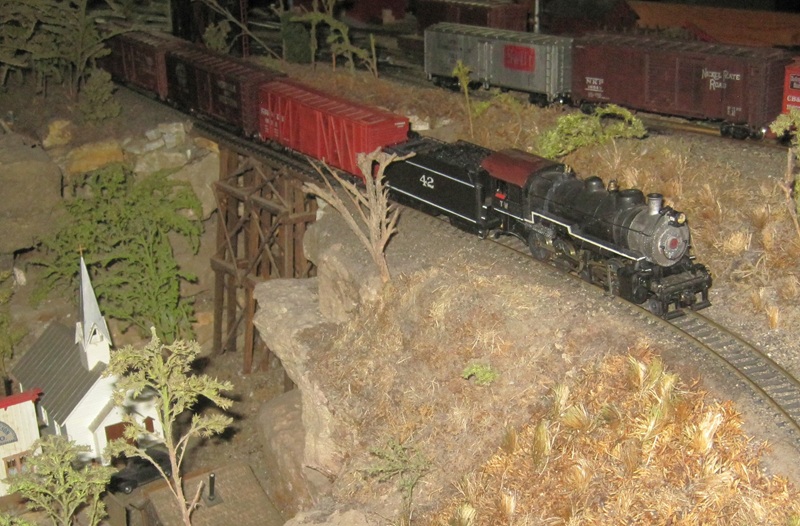
On such a steep grade, many locomotives, especially with a train pushing from behind, want to buck (stop-go, stop-go) down the hill. The causes of this are complex and varied. Most people will tell you it's too much end play or sloppy mesh in the worm, but you can tune that as far as it can be tuned and still have it. One thing that will mitigate it is lots of low-end torque. I modified the motor with a big neodymium magnet to get that:
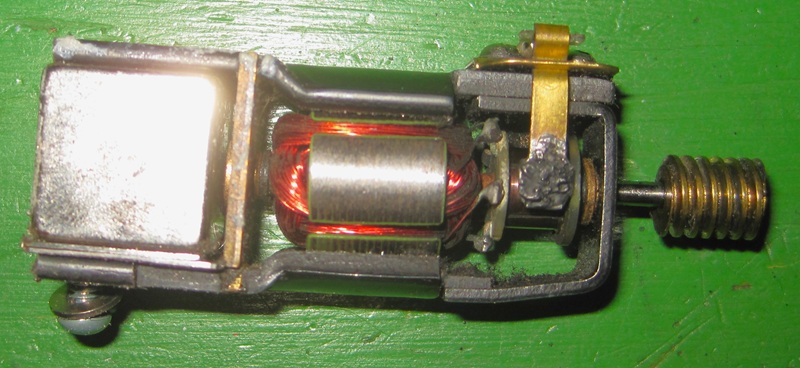
This ended the bucking, but there's another phenomenon called cogging. As the armature goes around, the windings break into and out of the magnetic field. The more intense the field the harder it cogs. If you turn this motor by hand, you can feel the cogging. If you run the motor, you can hear it as a whirring howl.
Bowser eventually changed the design to a skew would armature:
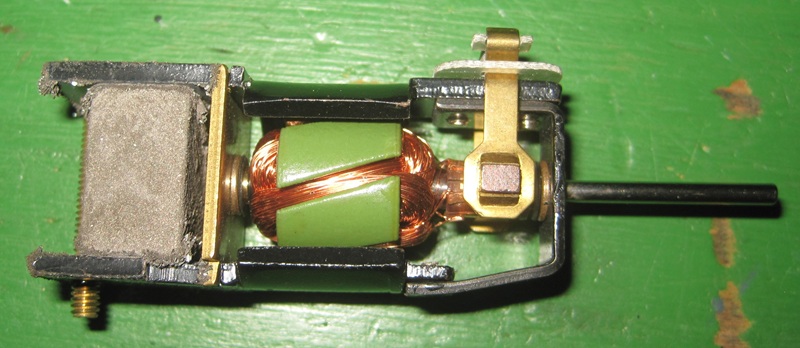
Those angled armature windings gently slice their way in and out of the field making far less noise. The magnets in the new motors are neodymium, so there's still pretty good torque, too.
In this same forum is a mention of a closeout sale at Bowser, with these new DC-71 motors going for 99 cents apiece. I ordered a couple of them and swapped one into my locomotive. It's not quite as powerful as the old, loud one, and it will buck if I try to creep down the hill, but if I drift the train down the hill above a crawl, but still at a sane speed, it's smooth, and the engine runs almost silently.
Two caveats:
1) It doesn't outpull a Mantua Mike, but it is a good puller.
2) They changed the screw holding the magnet from 4-40 to 5-40 when they updated the motor. There's a mounting bracket that attaches to that screw with a nut, so that's the size you need. It's an odd sort of specialty screw, and not very easy to find.
Carpe Manana!
|
Country:  USA ~
Posts: 2420 ~
Member Since: September 17 2013 ~
Last Visit: August 19 2026 USA ~
Posts: 2420 ~
Member Since: September 17 2013 ~
Last Visit: August 19 2026
|
 Alert Moderator
|
|
|
|
|
|
 Home
Home Forums
 Events Calendar
 Forum Admins & Mods
 Register