|
|
 Posted - December 30 2013 : 10:02:34 AM Posted - December 30 2013 : 10:02:34 AM


|
i cannot remember much as regards what the french have done of any worthwhile significance,but their use of regenerative braking,is a great one,the same motor,that gives loco its power is also the same one that stops the train,its the next thing the motor does that is unique,it generates electricity,that is not only used to power the train,but sell 20% to the national grid,ken
we in uk are experimenting with it,and think usa is also,but all the french trains that are being built and have been for past 3/4 years are running in service,if i am wrong about usa will stand corrected
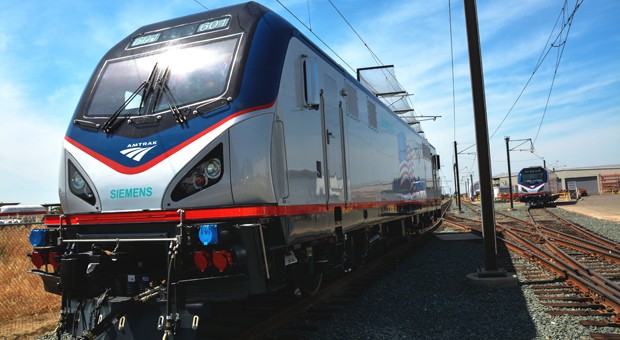
amtrak are taking regenerative braking it seems on their 70 high-efficiency Siemens ACS-64 trains,plus portlands TriMet units by 2015
Edited by - catfordken on December 30 2013 10:32:35 AM
|
Country:  United Kingdom ~
Posts: 8294 ~
Member Since: September 28 2006 ~
Last Visit: October 20 2021 United Kingdom ~
Posts: 8294 ~
Member Since: September 28 2006 ~
Last Visit: October 20 2021
|
 Alert Moderator
|
|
|
|
Posted - December 30 2013 : 10:38:05 AM
|
Electrified railroading is sort of scattered and localized in the USA. It seems to me I can remember some mention of some systems using regenerative braking, but cannot remember specifics.
The bulk of railroading, here, is diesel-electric with no wire to carry off the power from regenerative braking. We have locomotives equipped with dynamic brakes so the traction motor generates electricity to slow the train, but the output is just wasted through a large heating element. This saves on brake wear, but does nothing for fuel costs.
To give a sense of the energy involved, I was once on a train in Ecuador that was dynamic braking down a long grade. The ammeter read 250. Assuming the electrical system was 600 volts (a common voltage), that's 150kw. For a while, I was riding on the roof and it was a cold day. I came down into one of the cars for something and someone told me he expected to find me frozen to the roof. Really, it was reasonably warm on the roof because of the plume of heat coming off of the dynamic brakes. It takes a lot to heat the whole outdoors. 
Carpe Manana!
|
Country:  USA ~
Posts: 2421 ~
Member Since: September 17 2013 ~
Last Visit: September 22 2026 USA ~
Posts: 2421 ~
Member Since: September 17 2013 ~
Last Visit: September 22 2026
|
Alert Moderator

|
|
|
|
Posted - December 30 2013 : 10:44:23 AM
|
| hi scsshaggy,i realise you have same problem as us regards mixed power,even so for years the dynamic braking system was as you say wasting that power as heat,to turn it into a money spinning source of power is a great idea,and might help persuade countries who are frightened off electric power due to high cost of conversion to convert and reduce carbon emissions etc,ken
|
|
Country: United Kingdom ~
Posts: 8294 ~
Member Since: September 28 2006 ~
Last Visit: October 20 2021
|
Alert Moderator
|
|
|
MikeK
Switcher

Status:
offline
| |
Posted - December 30 2013 : 12:29:48 PM
|
My son, who worked with trains for a bit, had a good idea. Attach a special loco with regen at big hills. Only the hill track is wired. The train going down powers the track, a train going up uses the power to help climb the mountain.
The regens just travel the mountain, it would not take too many to cover daily use.
|
|
Country: USA ~
Posts: 50 ~
Member Since: December 15 2013 ~
Last Visit: August 27 2014
|
Alert Moderator
|
|
|
|
Posted - December 30 2013 : 2:25:17 PM
|
The use of electricy for locomotives does not make sense here in America. it is not energy efficient in The United States.
1. Most electricity is generated with fossil fuels. the French have an extensive nuclear generation capacity.
2. The generation and transmission of power is not as efficient as local generation due to line and conversion losses.
3. The physical transportation system would cost a great deal of money and time and would never justify the cost.
4. The lower efficiency of this type of power would offset any environmental benefits. More pollution would just be generated in a different location
These factors would make the wide spread use of electrical power for rail transportation less than practical. The cost analysis has been done. Amtrak is the only entity that is still using overhead to any extent in North America.
Nuclear or some future form of efficient energy generation may change the equation, but not yet.
On specialized high speed lines this may be a workable solution. That too remains to be seen.
Regards, John ***************
Understanding is a three-edged sword. Your side, my side, and the truth. <> J. Michael Straczynski
|
|
Country: USA ~
Posts: 886 ~
Member Since: January 11 2012 ~
Last Visit: December 16 2023
|
Alert Moderator
|
|
|
|
Posted - January 04 2014 : 7:22:27 PM
|
quote:i cannot remember much as regards what the french have done of any worthwhile significance,but their use of regenerative braking,is a great one,the same motor,that gives loco its power is also the same one that stops the train,its the next thing the motor does that is unique,it generates electricity,that is not only used to power the train,but sell 20% to the national grid,ken
we in uk are experimenting with it,and think usa is also,but all the french trains that are being built and have been for past 3/4 years are running in service,if i am wrong about usa will stand corrected
amtrak are taking regenerative braking it seems on their 70 high-efficiency Siemens ACS-64 trains,plus portlands TriMet units by 2015
Originally posted by catfordken - December 30 2013 : 10:02:34 AM
|
The MILWAUKEE ROAD did the same thing with its far superior to anything today far flung electrified railroad in the Rocky Mountains. Of course, by the time the powers that were learned that, the system was gone and the damage was done.
Another first for the french is to immediately surrender at the very mention of a war
String Bob
|
|
Country: USA ~
Posts: 85 ~
Member Since: December 13 2013 ~
Last Visit: February 27 2014
|
Alert Moderator
|
|
 Home
Home Forums
 Events Calendar
 Forum Admins & Mods
 Register