|
|
 Posted - November 22 2012 : 12:18:33 AM Posted - November 22 2012 : 12:18:33 AM


|
This is not a new subject, I have posted before but it is really discouraging me from running my trains.
I have one engine a C S X deisel 8 wheels 8 inches long.
In going around a gradual curve the front wheels jump the track. when going cab forward
It will only jump going forward, reverse no problem same spot. when i pick it up and physically turn it 180 it doesn't derail either going frontwards or back wards.
I have guaged the wheels and track and checked for level. The flange seems very shallow, wish it was deeper
There is also one box car that will derail at the same spot all others no problem
I know not being here to see it not much advice , but I'm ready to sell the engine and get another
|
Country:  USA ~
Posts: 424 ~
Member Since: June 25 2010 ~
Last Visit: July 30 2021 USA ~
Posts: 424 ~
Member Since: June 25 2010 ~
Last Visit: July 30 2021
|
 Alert Moderator
|
|
|
|
Posted - November 22 2012 : 12:32:05 AM
|
Is it the track?
I buy, repair, and collect
http://scvr.weebly.com/
http://seyboldlocomotiveworks.weebly.com/
http://www.youtube.com/user/TheDeputation?feature=watch
Hyde.
|
|
Country: USA ~
Posts: 1352 ~
Member Since: January 15 2012 ~
Last Visit: July 25 2021
|
Alert Moderator

|
|
|
|
Posted - November 22 2012 : 02:25:23 AM
|
Having two pieces of rolling stock that derail at the same spot points to the track. Granted, there is SOME issue with the loco and the car, but fixing the track defect should fix the problem.
Glenn
I was thinking of the immortal words of Socrates, who said, "... I drank what?"
|
|
Country: USA ~
Posts: 1714 ~
Member Since: December 13 2008 ~
Last Visit: October 05 2026
|
Alert Moderator
|
|
|
|
Posted - November 22 2012 : 08:02:33 AM
|
I agree that the track is likely the culprit and the loco an accomplice. Is the locomotive balanced for and aft? Here's something I've seen: A tail heavy loco goes over a slightly low spot and lifts the front truck a tiny amount, enough to derail. Derailing in one direction is a clue for this kind of thing. And total weight of the loco can be a factor. NMRA has standards for loco and rolling stock weights.
When you check track gauge are you using that flat plate that you hold vertically over the rails?
NMRA standards gauge. That's fine.
There is also a ribbon rail gauge. You lay it between the rails, it's about 5 inches long. You have to get different ones for each different radius of track on the layout.
Unspoken expectations are premeditated failures.
|
|
Country: USA ~
Posts: 825 ~
Member Since: December 22 2008 ~
Last Visit: March 16 2015
|
Alert Moderator
|
|
|
|
Posted - November 22 2012 : 2:25:04 PM
|
At times I have had an engine or rolling stock derail on a curve from a defect in car body that interfered with a truck and preventing freedom of motion. The truck should be able to rotate a little more than is needed for the curve radius and the truck should be able to rock backward, forward, and side to side when rotated for the desired curve. Usually a defect I find has been introduced by me  when adding coupler boxes or some other alteration; sometimes from warped frames. when adding coupler boxes or some other alteration; sometimes from warped frames.
|
|
Country: USA ~
Posts: 171 ~
Member Since: November 26 2009 ~
Last Visit: October 10 2026
|
Alert Moderator
|
|
|
|
Posted - November 22 2012 : 2:33:16 PM
|
Truck mounted couplers don't work well on sharp corners, body mounted couplers do. Depends on the radius of the corners too.
I buy, repair, and collect
http://scvr.weebly.com/
http://seyboldlocomotiveworks.weebly.com/
http://www.youtube.com/user/TheDeputation?feature=watch
Hyde.
|
|
Country: USA ~
Posts: 1352 ~
Member Since: January 15 2012 ~
Last Visit: July 25 2021
|
Alert Moderator
|
|
|
|
Posted - November 22 2012 : 3:00:17 PM

|
| What brand of engine is it? I've seen some engines where wires on the loco's interior can get in the way of the truck. This will limit the truck's ability to rotate, which could potentially force the wheels off the track.
|
Country:  Canada ~
Posts: 3448 ~
Member Since: September 22 2006 ~
Last Visit: April 03 2026 Canada ~
Posts: 3448 ~
Member Since: September 22 2006 ~
Last Visit: April 03 2026
|
Alert Moderator
|
|
|
|
Posted - November 22 2012 : 4:21:39 PM
|
i was wrong .
My 8 inch Santa Fay same thing same place. Only derails at that one spot only going forwards. Pick it up, turn it around, same direction going backwards does not derail.
only the front trucks derail and only in one direction
weighs 13 ozs
I have a NMRA guage. all wheels and track fit. Laid a straight edge on track and joints, all flat
Problem section a curve on an incline, radius about 20 inches
Only choice is to rip up problem area and re lay track
|
|
Country: USA ~
Posts: 424 ~
Member Since: June 25 2010 ~
Last Visit: July 30 2021
|
Alert Moderator
|
|
|
|
Posted - November 22 2012 : 4:30:49 PM
|
You mention the track is on an incline. If there is a vertical curve there and you have an obstruction inside the loco as Cheez mentioned, that could be your problem.
Glenn
I was thinking of the immortal words of Socrates, who said, "... I drank what?"
|
|
Country: USA ~
Posts: 1714 ~
Member Since: December 13 2008 ~
Last Visit: October 05 2026
|
Alert Moderator
|
|
|
|
Posted - November 22 2012 : 5:16:44 PM
|
quote:You mention the track is on an incline. If there is a vertical curve there and you have an obstruction inside the loco as Cheez mentioned, that could be your problem.
Originally posted by gmoney - November 22 2012 : 4:30:49 PM
|
two different engines and only affecting one way. pretty coincedental
is it possible that the front wheels not turning enough even though a 20 in radius
|
|
Country: USA ~
Posts: 424 ~
Member Since: June 25 2010 ~
Last Visit: July 30 2021
|
Alert Moderator
|
|
|
|
Posted - November 22 2012 : 5:52:02 PM
|
Are the two locos same brand and type?
I'm assuming your 20" radius track is not sectional. Are you sure the radius is constant thru the curve? I once saw a camelback loco derail on a curve because of one spot where the radius was tighter than in the rest of the curve.
Other than that I got nothin'!
Glenn
I was thinking of the immortal words of Socrates, who said, "... I drank what?"
|
|
Country: USA ~
Posts: 1714 ~
Member Since: December 13 2008 ~
Last Visit: October 05 2026
|
Alert Moderator
|
|
|
|
Posted - November 22 2012 : 7:19:45 PM
|
quote:two different engines and only affecting one way. pretty coincedental
is it possible that the front wheels not turning enough even though a 20 in radius |
What kind of drives do they have? Engines with a truck-mounted motor generally have a lot of wires crammed in to a small amount of space. If the wires aren't flexible enough or have shifted they could be affecting the truck's ability to rotate.
|
|
Country: Canada ~
Posts: 3448 ~
Member Since: September 22 2006 ~
Last Visit: April 03 2026
|
Alert Moderator
|
|
|
|
Posted - November 22 2012 : 9:56:46 PM
|
[quote]Are the two locos same brand and type?
don't think so, the Santa Fay is a Bachman and can't tell what the C S X is
I'm assuming your 20" radius track is not sectional.
yes and no. Flex track leading into a curve
Are you sure the radius is constant thru the curve?
most likely isn't. goes from 20 to straight to cross over see pic
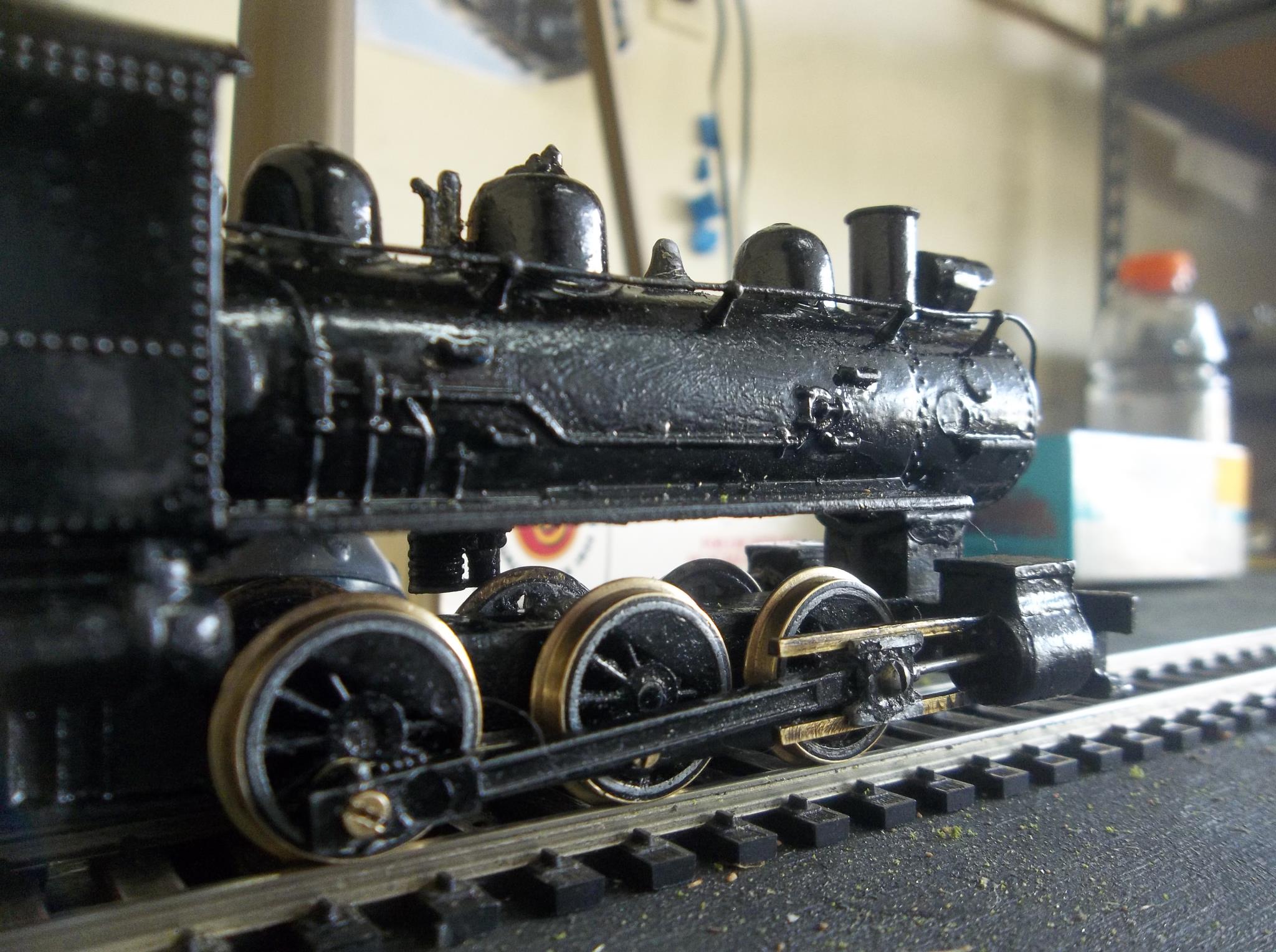
here is the bottom of the two engines.
The front and back trucks look like they have the same radius. The ATSF has a slightly tighter turn when compared to the C S X. Yet both derail and only going forward
When i push them with my finger no problem. It's like the wheel climbs the track, but why only when traveling cab forward is driving me
I once saw a camelback loco derail on a curve because of one spot where the radius was tighter than in the rest of the curve.\
\thanks for the clue. looking down the track i could see the smallest of waves in the curve. Not sure if it shows in pic. Wedged it over with a couple of track nails and it seemed to do the trick
next task is to determine why some cars derail, suspect couplers too stiff
e] 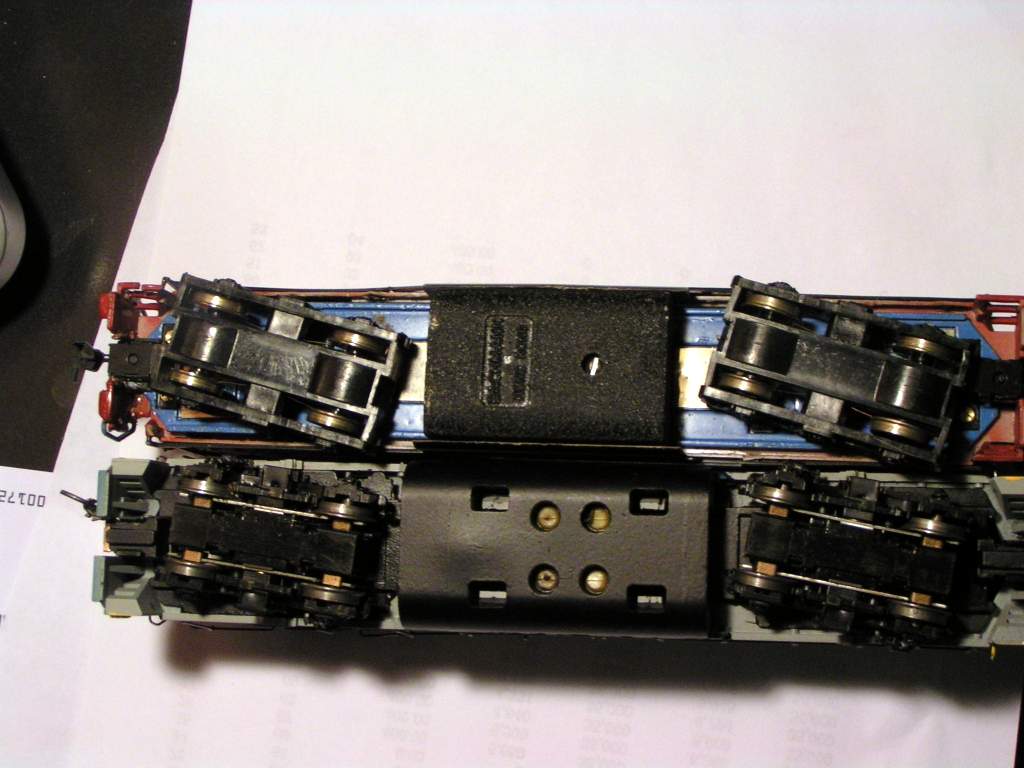 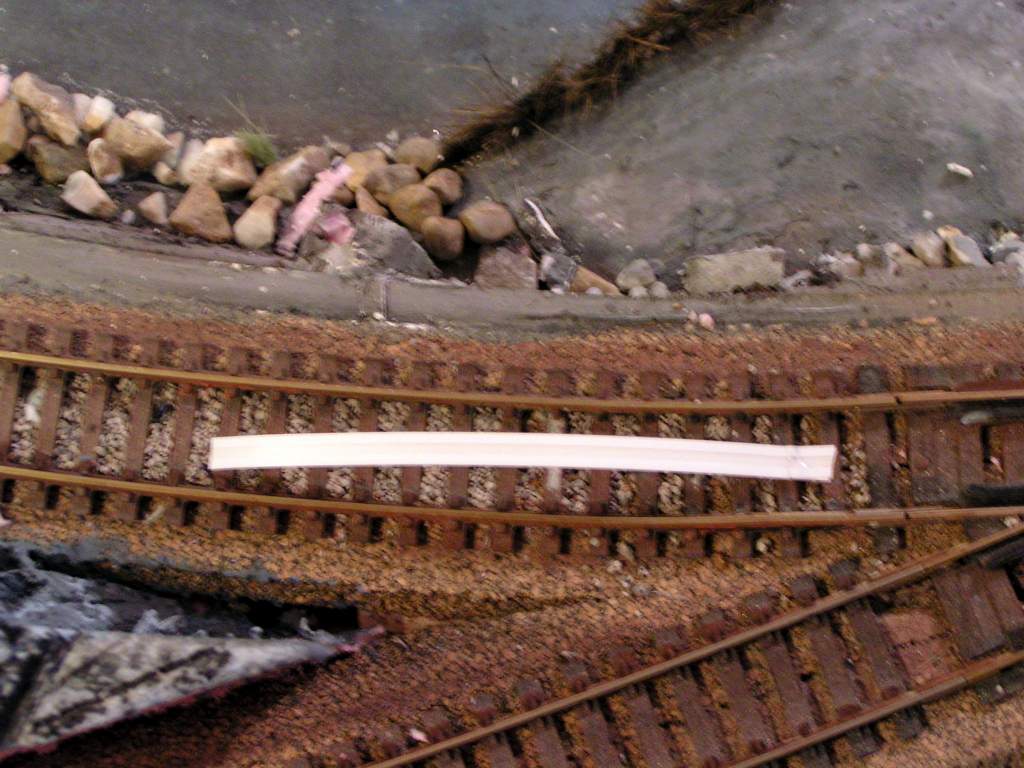
|
|
Country: USA ~
Posts: 424 ~
Member Since: June 25 2010 ~
Last Visit: July 30 2021
|
Alert Moderator
|
|
|
|
Posted - November 23 2012 : 12:06:50 AM
|
I can see something odd about the rail alignment in the picture. I'm glad you got your derailment problem fixed. I wish you the same luck with the derailing cars.
Btw, the other loco looks like Athearn to me.
Glenn
I was thinking of the immortal words of Socrates, who said, "... I drank what?"
|
|
Country: USA ~
Posts: 1714 ~
Member Since: December 13 2008 ~
Last Visit: October 05 2026
|
Alert Moderator
|
|
|
|
Posted - November 30 2012 : 4:10:52 PM

|
Fred,
A few things I can see, is about one inch to the left of the rail joint, the track isn't "continuously curved, and that could be the issue!
As for the CSX diesel you have, have a picture of its under side? IF its an Athearn check to make sure the wheels are gauged with the NMRA standards gauge, and BE SURE the bearings aren't to tight and fit sort of loosely on them as that can and will prevent the axles from sliding side to side when they traverse the layout, specially in the curve as they would have to slide side to side in order to make that curve as its just odd enough to force the axles out on the middle axle, and inward on the end axles......
I await your picture of the bottom of this CSX loco......as I'll help you trouble shoot it if I can from eyes visions to correct the issue!
~John
Many have tried to, and failed, ya just can't repair stupid... 
Do NOT try to Idiot-Proof anything!!!! God, will simply create a better......IDIOT!
|
|
Country: USA ~
Posts: 2911 ~
Member Since: March 26 2012 ~
Last Visit: January 14 2014
|
Alert Moderator
|
|
|
|
Posted - November 30 2012 : 5:06:34 PM
|
[quote]Fred,
A few things I can see, is about one inch to the left of the rail joint, the track isn't "continuously curved, and that could be the issue!
i have since "bumped it out and held with spikes
As for the CSX diesel you have, have a picture of its under side? IF its an Athearn check to make sure the wheels are gauged with the NMRA standards gauge, and BE SURE the bearings aren't to tight and fit sort of loosely on them as that can and will prevent the axles from sliding side to side when they traverse the layout, specially in the curve as they would have to slide side to side in order to make that curve as its just odd enough to force the axles out on the middle axle, and inward on the end axles......
the picture of the train on the bottom is the C S X, santa fay at the top
The wheels have been gauged a number of times and found o k. To make the wheels slide side to side more than they do now would mean I'd have to slide the wheels out on the axles and that would throw them off gauge. Only other way would be to remove the wheels mill down the sides of the bearings
|
|
Country: USA ~
Posts: 424 ~
Member Since: June 25 2010 ~
Last Visit: July 30 2021
|
Alert Moderator
|
|
|
|
Posted - November 30 2012 : 5:17:15 PM
|
Seems to me that the gauge is too narrow between the 3rd and 4th tie from the switch on the right hand side of the photo. I'm also noticing that the gauge might be too wide at the joint where the curve and switch connect.
My Youtube Channel: http://www.youtube.com/user/weekendrailroader?blend=1&ob=video-mustangbase
|
|
Country: USA ~
Posts: 189 ~
Member Since: March 07 2012 ~
Last Visit: February 16 2026
|
Alert Moderator
|
|
|
|
Posted - November 30 2012 : 9:57:49 PM
|
Fred,
See! I would make sure the axles are "centered" on the drive gear axle, as alot of times people will "gauge" the wheels, pulling in, or pulling out only ONE side of the axle, which in turn throws the whole works to one side and this too will lead to derailments as well!
I will say tho, the Athearn model you pictured, shows a "wide" gauge, and I would say, alittle twist inward on those axles, (NOT to much but a little more inbound on the axle gear) will go along ways! About the thickness of a piece of .030 styrene sheet would almost be to much but IF centered, that be .015" each side, which isn't bad!
Try it see if it helps......As it looks the gauge is slightly to wide for the curve and looks that only one side might be adjusted and not "centered" on the wheel set.
~John
Many have tried to, and failed, ya just can't repair stupid...
Do NOT try to Idiot-Proof anything!!!! God, will simply create a better......IDIOT!
|
|
Country: USA ~
Posts: 2911 ~
Member Since: March 26 2012 ~
Last Visit: January 14 2014
|
Alert Moderator
|
|
 Home
Home Forums
 Events Calendar
 Forum Admins & Mods
 Register